In Toulon, the "Diving into the Unknown" exhibition closes the "Depths" cycle by exploring the history and contemporary issues of underwater adventure in the Mediterranean.
The Mediterranean, cradle of underwater exploration
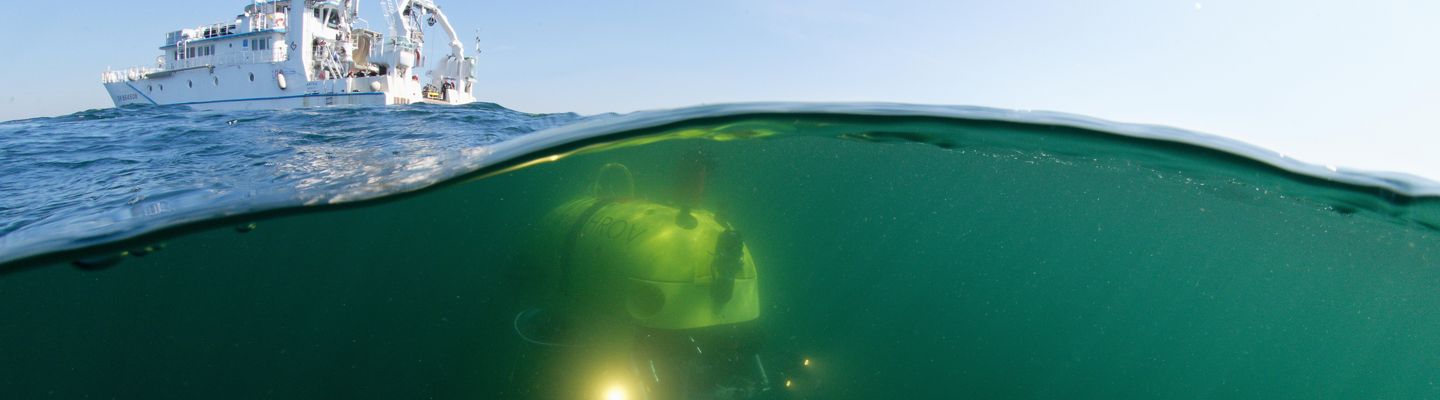
 Enlarge image : Photographie mi-air mi-eau montrant un navire en surface et un robot sous-marin HROV en mission de cartographie des fonds marins, campagne Ifremer 2018
©IFREMER O.DUGORAY
The final chapter of the "Depths" cycle, presented at the musée national de la Marine in Toulon from 18 November 2026 to 27 June 2027, the exhibition Diving into the Unknown highlights the founding role of the Mediterranean coastline in the history of deep-sea exploration.
From Saint-Raphaël to Marseille, via Hyères and Toulon, this region gave rise to major innovations: Commandant Cousteau's earliest explorations, the invention of the self-contained diving apparatus, bathyscaphe expeditions, and the rise of recreational diving.
From historic innovations to contemporary challenges
Heir to this history, the Mediterranean remains today a key territory for scientific research and underwater operations.
The exhibition highlights the major players based in this region, such as Ifremer, CEPHISMER and DRASSM, and addresses current issues relating to the protection of maritime heritage, defence, resource exploitation and biodiversity conservation.
The evolution of diving technologies
Following a chronological narrative, the exhibition traces the evolution of diving techniques, from 19th-century heavy diving suits to modern remotely operated underwater vehicles.
It highlights the technological breakthroughs that have enabled humans to explore an environment long considered inaccessible.
A rich, immersive journey
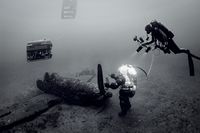 Enlarge image : Épave du Mustang P-51 explorée par un plongeur en scaphandre Newsuit et un ROV, 2008.
Frédéric Bassemayousse
Through works of art, photographs, archaeological objects, equipment, models, archives and films, the exhibition invites visitors to explore the diversity of practices and representations of the underwater world.
It unfolds in four stages, from the age of immersion to that of knowledge transmission. The first room immerses visitors in the world of diving suits: their invention in the 19th century marked an early milestone, and hard-hat divers still practise one of the most dangerous professions in the world today. Next comes the age of innovation, with the development of the self-contained diving apparatus in Saint-Raphaël in the 1930s, which freed divers from the air hose tethering them to the surface and paved the way for the first underwater films — a discipline still celebrated today through a dedicated festival created in 1974. The adventure continues with submersibles: in the 1950s, bathyscaphes made it possible to descend several thousand metres, before being gradually replaced, from the late 1980s onwards, by small manned submarines and remotely operated vehicles piloted from the surface.
The exhibition thus bears witness to the enduring nature of underwater activity, spanning scientific discovery, military use, technical innovation, and the protection of heritage and marine ecosystems. It concludes by drawing a parallel between ocean exploration and space exploration, opening a reflection on these still largely unknown worlds.
The bathyscaphe FNRS III, a living symbol of the underwater adventure
Built in 1951 in Toulon by the French Navy and the Direction des Constructions Navales, based on the work of Professor Auguste Piccard, the FNRS III was the first self-propelled bathyscaphe to reach great depths. In 1954, off the coast of Dakar, it set the world record for manned diving, reaching a depth of 4,050 metres — a record held by France for six years.
Acquired by the Musée national de la Marine's collections in 1978, the FNRS III has stood since 1982 in the gardens of the Tour Royale in Toulon, overlooking the harbour. This location, highly exposed to sea spray and the mistral wind, has accelerated its corrosion despite two restorations carried out in 1992 and 2005. The exhibition offers an opportunity to revisit its history through a model, photographs and archives: the bathyscaphe will undergo a major restoration campaign in late 2026, in consultation with the City of Toulon.
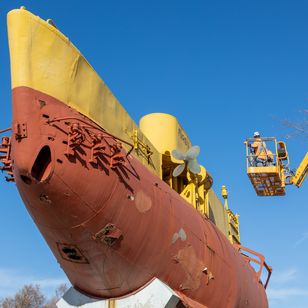
Help bring the bathyscaphe FNRS III back to life
The Musée national de la Marine has partnered with the Fondation du patrimoine to restore the bathyscaphe FNRS III. Visit the Fondation du patrimoine website to find out more and contribute to the campaign to save the FNRS III.
Curators
Elsa Lewuillon, Administrator of the musée national de la Marine in Toulon
Marianne Tricoire, Heritage Curator and Collections Manager at musée national de la Marine
An exhibition with a certification label

Major patron

Patrons


Five exhibitions, five complementary perspectives
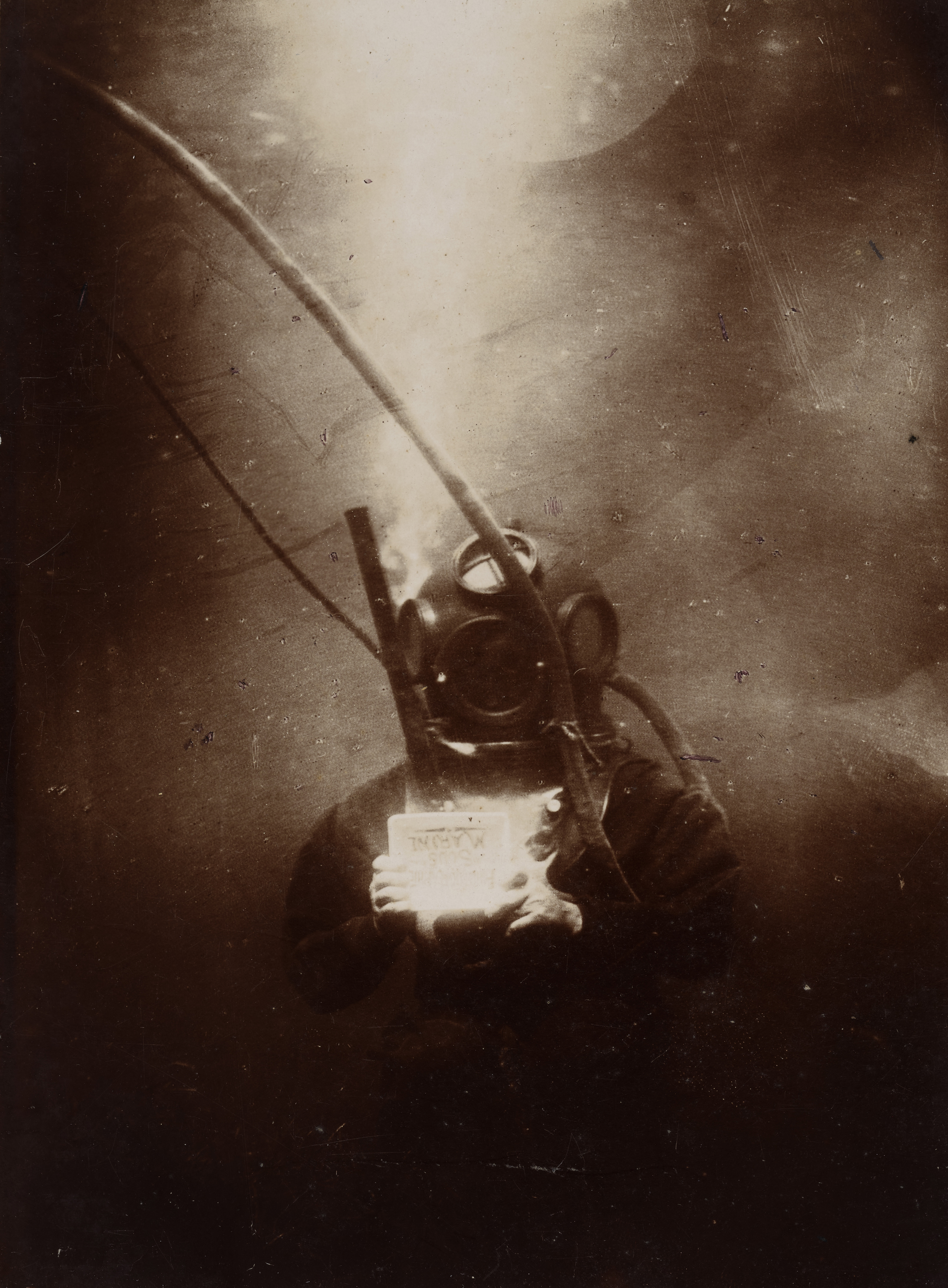
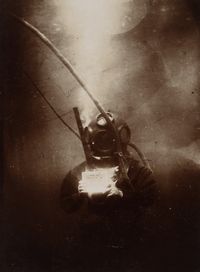 Enlarge image : Portrait of a diver in a diving suit underwater, photographed by Louis Boutan in 1898 in Banyuls-sur-Mer, historic image of early underwater exploration.
From underwater cartography in Brest to the invention of the first submersibles in Rochefort, via technical innovations in Port-Louis and deep-sea exploration in Toulon, visitors will discover different facets of underwater exploration.
In Paris, a major exhibition will trace the history of deep-sea exploration across eras and oceans, bridging literary and artistic imagination, scientific discoveries and technological advances.
This major cultural highlight of autumn 2026 will be enriched by an extensive programme (talks, encounters, screenings, special evening events, etc.), also presented across the museum’s regional sites.
As part of this thematic cycle, the museum will undertake the restoration of a major piece from its collections—a flagship of French maritime heritage: the FNRS III bathyscaphe, a deep-sea exploration vessel located in the gardens of the Tour Royale in Toulon.
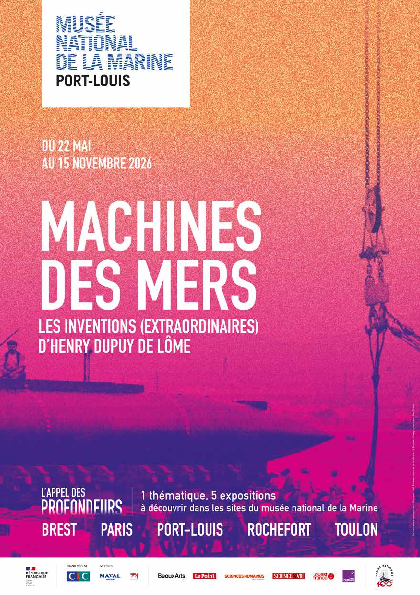
Port-Louis – Machines of the Seas : The (Extraordinary) Inventions of Henri Dupuy de Lôme
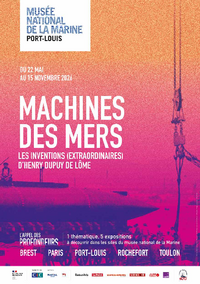
22 May – 15 November 2026
The Depths season will open at the Citadel of Port-Louis with an exhibition dedicated to Henri Dupuy de Lôme (1816–1885), designer of the Gymnote, the first operational French submarine, and inventor of the armoured hull process.
Echoing the 400th anniversary of the French Navy, the exhibition will immerse visitors in the major innovations that transformed the French Navy in the second half of the 19th century and helped assert France’s naval power.
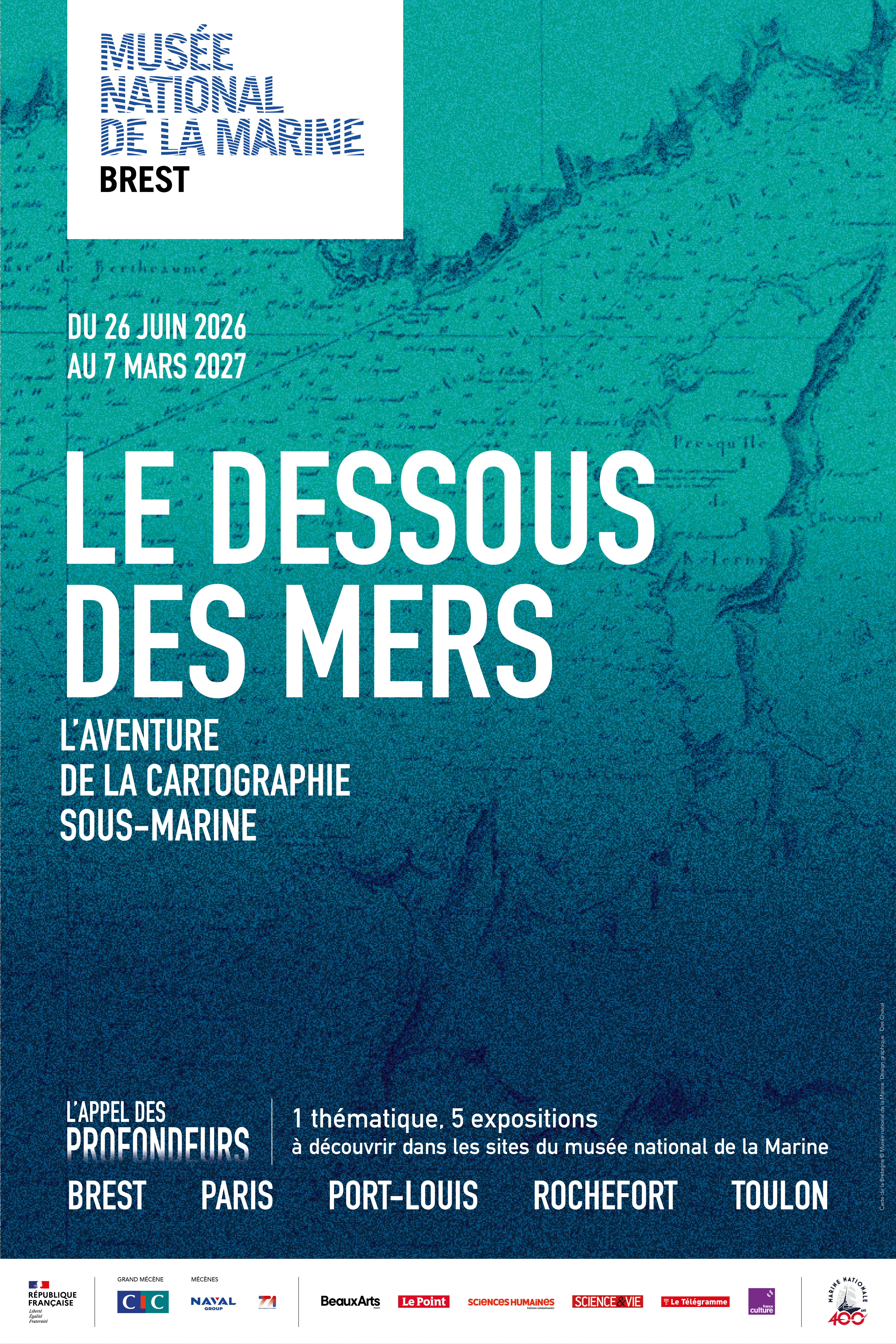
Brest – Mapping the unseen: The adventure of underwater cartography
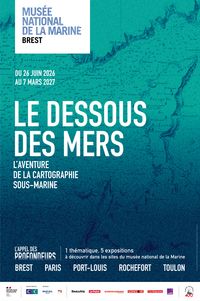
26 June 2026 – 7 March 2027
Presented at the museum in Brest, the second exhibition in the Depths cycle will explore the history of underwater cartography and how its challenges have evolved over time.
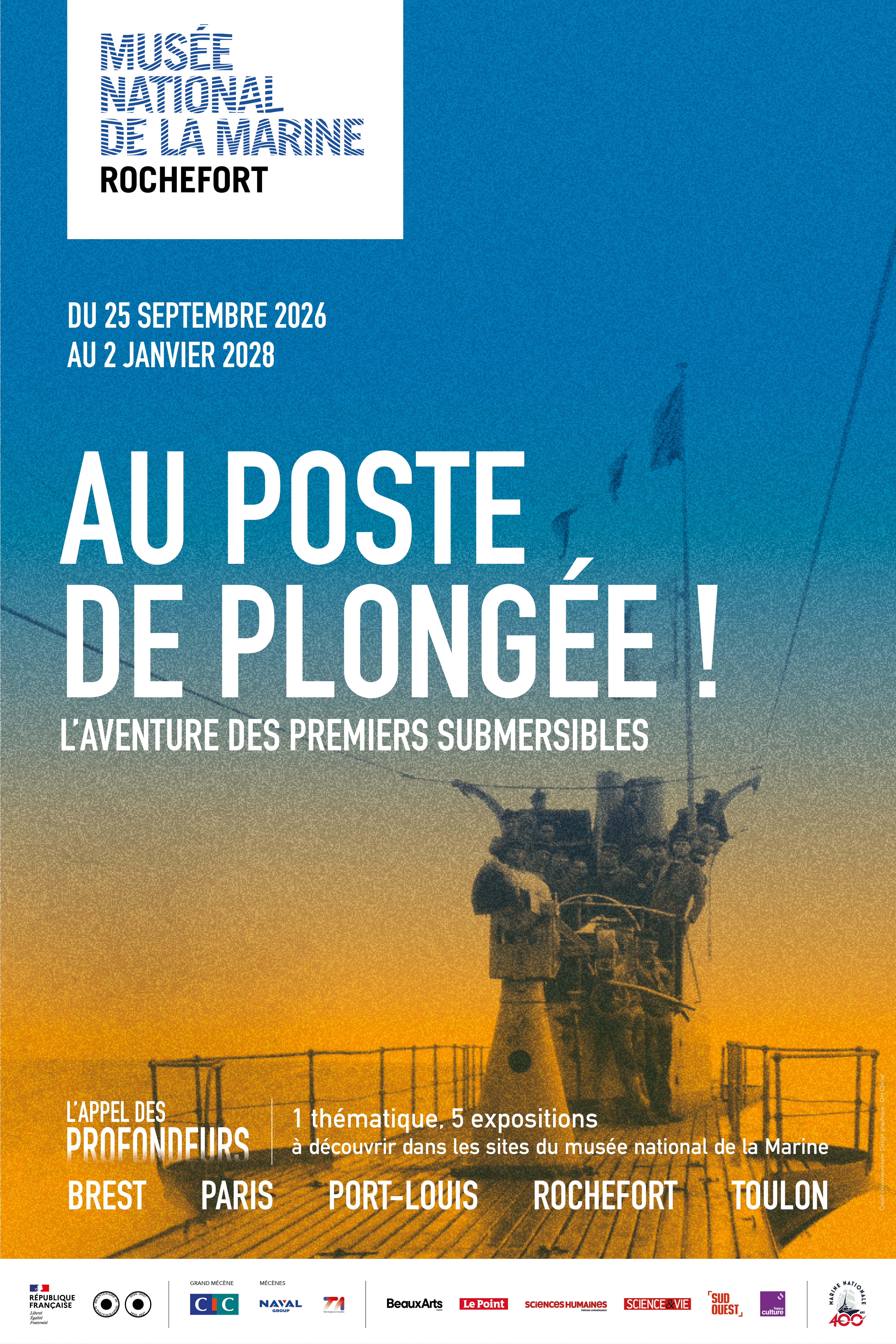
Rochefort – Diving in! The adventure of the first submersibles
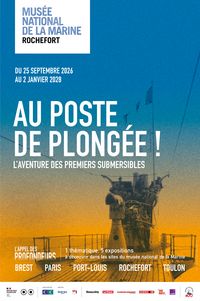
25 september 2026 - 02 january 2028
In Rochefort, Depths will focus on the origins of the first military submersible vessels, whose history is closely linked to the Charente naval arsenal.
Paris – Into the Deep. An undersea adventure from Antiquity to the present day.
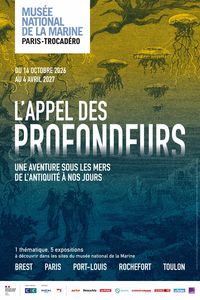


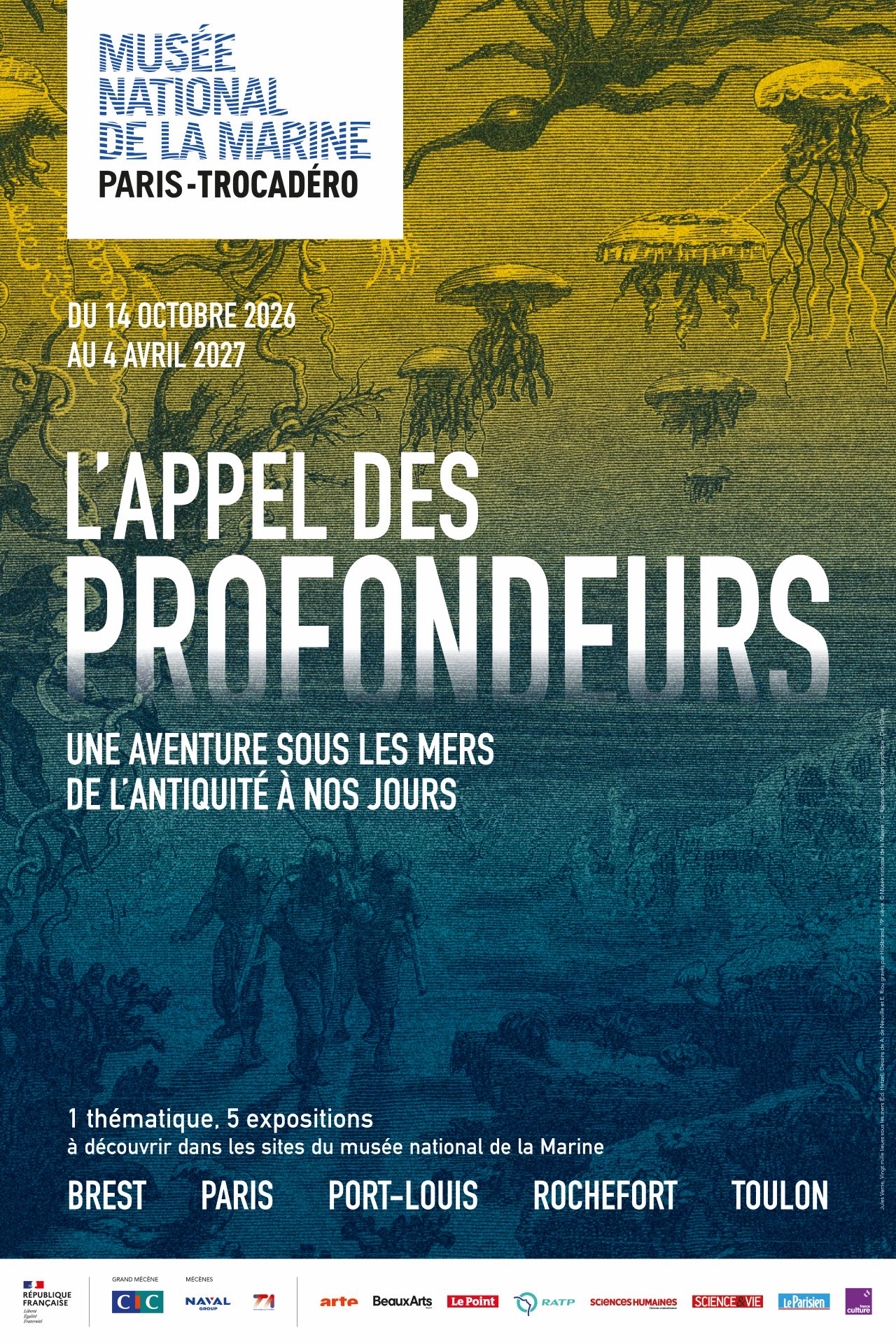
14 October 2026 – 04 april 2027
As the highlight of the network-wide programme, the museum in Paris will present a major exhibition in autumn 2026 dedicated to the great adventure of deep-sea exploration.
Through art, literature, science and technology—as well as popular culture—the exhibition will explore the motivations and initiatives that have pushed humanity to extend its reach beneath the surface of our planet.
Informations pratiques
November 18, 2026 through june 27, 2027
Place Monsenergue, Quai de Norfolk – 83000 Toulon.
The exhibition is included in the museum ticket